Blinds Vs Awnings: Which Is Right For Your Space?
There's a moment most homeowners recognise: standing in a room that's uncomfortably bright by 11am, or looking out at a deck that hasn't been used since March. The solution isn't always obvious. Do you hang something on the inside of the window, or deal with the problem before it gets through the glass?
When it comes to
blinds and awnings in Newcastle, both are legitimate answers — but they solve different problems. This guide walks through the scenarios where each performs best and explains when both belong in the same home.
When the Problem Is Inside: The Case for Blinds
Blinds are an interior solution. Fitted inside the recess or across the face of the frame, they manage light and privacy once it's already entering the room. For a bedroom catching early morning sun, a bathroom facing a neighbour's fence, or a living area where you want to reduce glare without losing the view, they give you precise, adjustable control.
The main types each suit different needs:
- Roller blinds: available in everything from sheer sunscreen fabrics to full block-out, making them one of the most versatile options across living areas and bedrooms
- Roman blinds: a softer, more structured look for formal living areas where fabric texture matters
- Venetian blinds: aluminium or timber slats that allow precise light angle adjustment without eliminating it entirely
- Panel glide blinds: a practical solution for large windows and sliding door openings where a single blind isn't wide enough
Where thermal performance matters, honeycomb blinds add an insulating layer that reduces heat transfer. They won't intercept heat the way an external product does, but they reduce what enters the room.
Heat Before It Hits the Glass: Why Awnings Work Differently
The key distinction is where each product intervenes. Blinds manage heat after it enters through the glass. Awnings stop it before it reaches the glass at all.
This matters because glass absorbs and re-radiates heat into the room even after a blind is drawn. On a 35-degree afternoon, an interior blind cuts glare but the window is still acting as a radiant heat source. An awning shades the glass itself, so it never heats up. The thermal difference is measurable, particularly on large glazed areas or windows that catch direct afternoon sun.
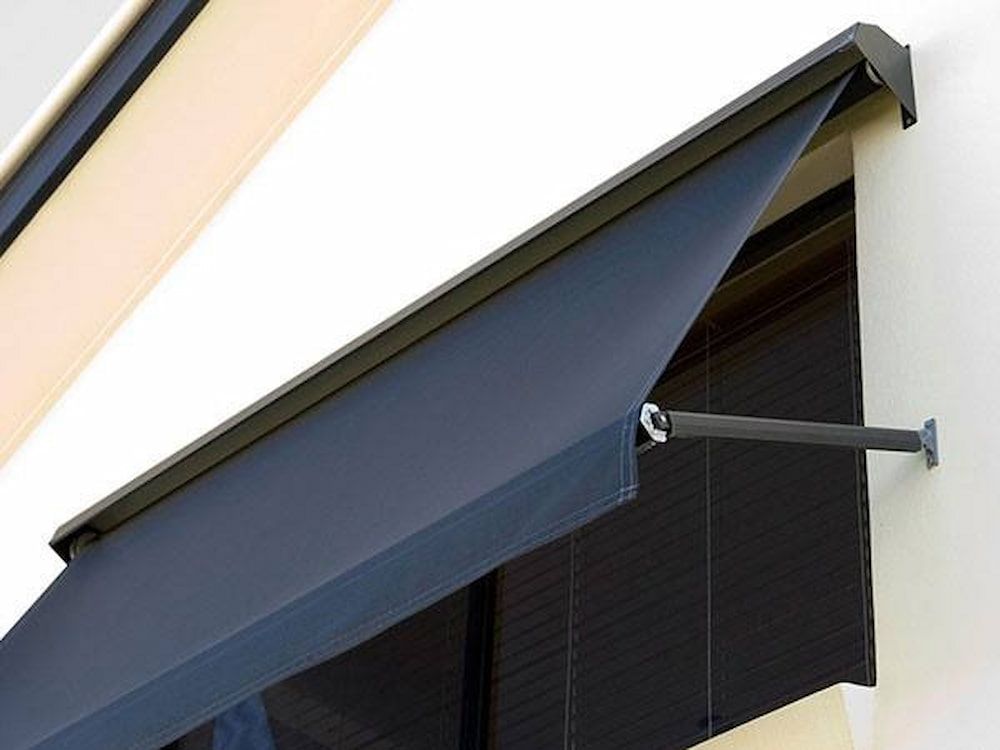
- Fixed awnings: powder-coated aluminium frames with permanent fabric; low maintenance and well-suited to windows with consistent sun exposure
- Retractable folding arm awnings: the most common choice for decks and alfresco areas; extend when needed and retract when not
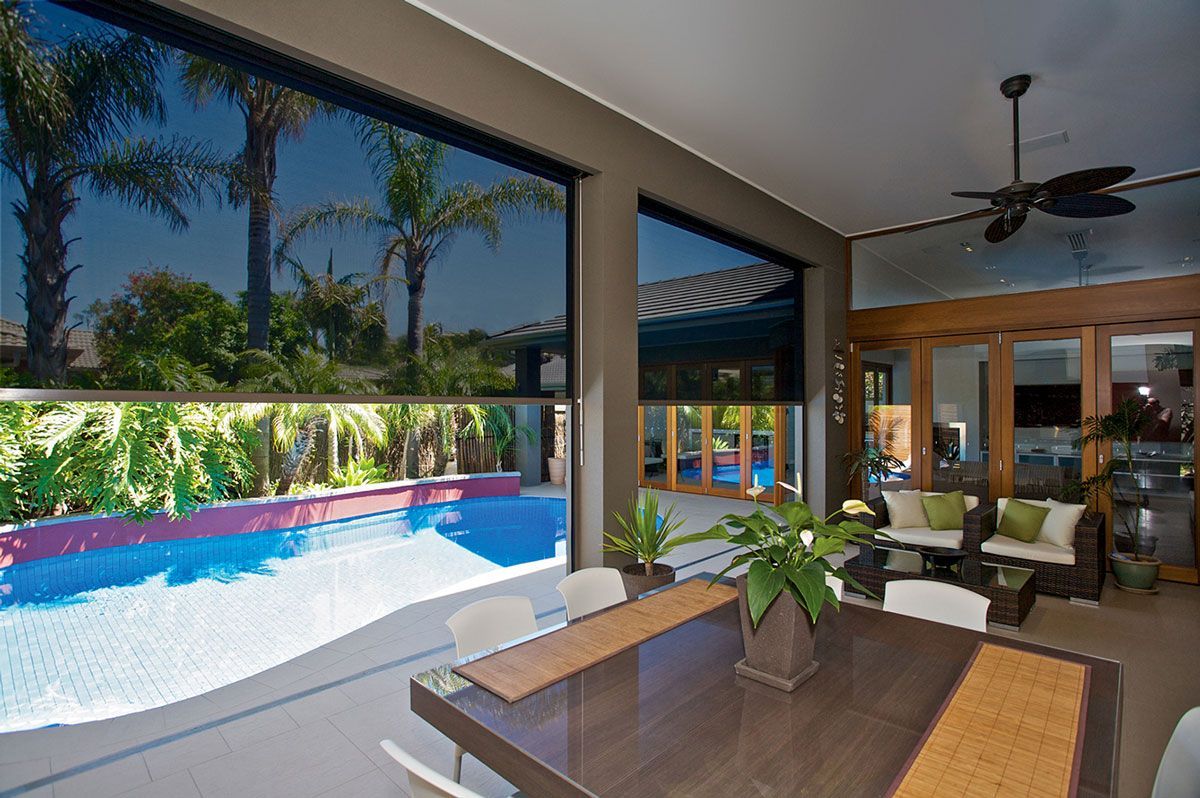
- Straight drop awnings: fabric panels that drop from a head box, useful for enclosing a pergola or blocking low-angle sun and rain
- Pivot arm awnings: project outward at an angle, suitable where a folding arm isn't practical due to clearance constraints
Which Rooms and Windows Point You Toward Blinds?
Not every window suits an awning. Second-storey windows, rooms where privacy matters more than heat, and spaces that don't face direct sun are all situations where blinds make more sense.
Scenarios where blinds are the right call:
- Bedrooms: block-out roller blinds or honeycomb blinds give complete light elimination and a thermal buffer overnight, particularly for east-facing rooms
- Bathrooms and laundries: moisture-resistant PVC rollers or aluminium venetians handle humidity without warping or moulding
- North-facing living areas: these rooms get diffuse, consistent light rather than harsh direct sun, making sheer or sunscreen rollers the proportionate response
- Privacy-first rooms: day-night rollers and translucent romans let light in while blocking visibility from the street
Where an awning is feasible and sun exposure is significant, it will outperform a blind on heat. But blinds remain the default for most windows, particularly where the issue is privacy, diffused light, or where an external fitting isn't practical.
Outdoor Spaces That Sit Unused Half the Year
A lot of outdoor entertaining areas are unusable from November through February. The pergola is there, the furniture is there, but direct sun or heat radiating off a western-facing wall makes it unbearable from midday.
A retractable folding arm awning changes this. Extended over a deck or patio, it creates a shaded zone several degrees cooler than the surrounding area.
Other applications worth considering:
- Straight drop awnings on pergola perimeters: block low-angle sun and wind-driven rain, extending usability into the cooler months
- Awnings over outdoor kitchens and BBQ areas: protect equipment and people from sun and light rain
- Motorised awnings with wind sensors: automatically retract in high winds, particularly useful for exposed coastal properties where afternoon breezes can be strong
- Fixed awnings over entry doors: weather protection that requires no operation, keeping entries dry in rain and shaded in summer
Fabric and Material Choices Across Both Products
Performance comes down to fabric specification more than most buyers expect. Two roller blinds both described as "sunscreen" can differ significantly depending on the openness factor of the weave:
- Openness factor in screen fabrics: a 3% openness factor gives significantly more UV and glare reduction than a 10% openness, while still allowing an outward view; block-out fabrics have 0% openness
- Solution-dyed acrylic for awnings: the standard for outdoor use; colour is dyed through the fibre, so UV and moisture don't cause fading or degradation over time
- PVC-coated polyester: cost-effective for sheltered awning applications, though it won't match solution-dyed acrylic in fully exposed positions
- Moisture-resistant linings for blinds: essential in bathrooms and kitchens; standard fabric rollers in high-humidity rooms will develop mould within a couple of years
Getting the specification right for actual conditions is what separates a product that lasts a decade from one that fails in three.
Can You Use Both? When Blinds and Awnings Work Together
In most homes the answer isn't one or the other. It's both, solving different problems in different parts of the house.
Common combined applications:
- West-facing living areas: an awning handles the afternoon heat load on the exterior glass; roller blinds or sheers manage privacy and light inside in the evening
- Alfresco rooms with sliding door connections: straight drop awnings on the perimeter, blinds on the adjacent internal glazing
- Bedrooms with east-facing windows: block-out blinds handle morning light where an awning isn't practical; both together give maximum performance where summer sun is an issue
- Multi-storey homes: ground floor windows suit awnings where access allows; upper floors are better served by quality interior blinds
Treating them as complementary rather than competing opens up solutions that neither delivers alone.
What to Think About Before You Measure or Quote
A few things worth thinking through before booking:
- Window orientation: north, south, east, and west-facing windows have different sun profiles; an awning on a south-facing window provides weather protection but little heat reduction
- Coastal exposure: properties near the coast need products specified for salt air; standard powder coating and fabrics that perform well inland will degrade faster in marine environments
- Restrictions: heritage overlays, strata complexes, and some estate covenants can limit external modifications; worth confirming before committing to an awning
- Interior vs exterior problem: if the primary issue is privacy or diffused light, blinds are usually the right answer; if it's heat or outdoor usability, awnings address the root cause
Being clear on the actual problem, rather than starting with a product preference, consistently produces better outcomes.
We at
Maxview Blinds & Shutters work with homeowners across Newcastle and the Hunter who are dealing with these decisions: west-facing rooms uninhabitable by mid-afternoon, outdoor areas that haven't been used in years, and coastal properties where salt air makes specification matter. Whether you're looking at
awnings in Newcastle or trying to work out the right blind for a problem room, we offer a free measure and quote, which in practice means a conversation about your windows and what you're trying to fix. If you're renovating, building, or fed up with a space that isn't working,
get in touch for a straight answer.